ADVERTISEMENT — This is a paid advertisement for ReAlign. It is not an independent news article.
THE QUIET SHIFT
WOMEN'S HEALTH
INTIMACY AFTER 50
I Spent Three Years Thinking My Body Had Given Up On Me. It Was a 27-Degree Problem.
She's 54. Married 26 years. She had quietly decided this part of her life was finished — until a friend told her something in a parking lot that took eleven minutes to explain and one night to prove.
By Diane Whitaker · Contributing Writer · Updated June 2025
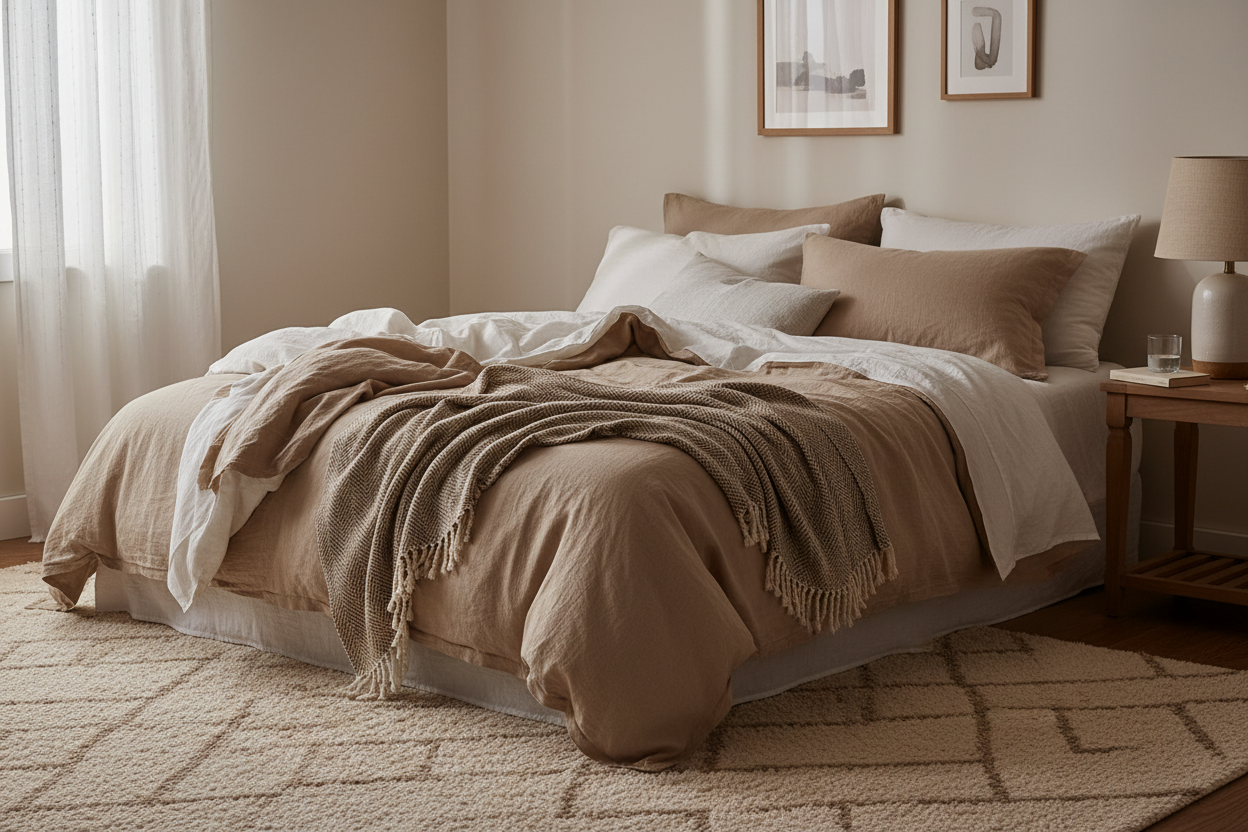
Most women never suspect the surface they're lying on is part of it.
There's a specific kind of quiet that settles into a long marriage, and nobody warns you about it. It isn't fighting. It isn't distance. It's the absence of something you didn't notice leaving.
I noticed it at a dinner party. Four couples, all of us somewhere past twenty years. And across the table my friend Rachel put her hand on her husband's knee for no reason at all — not for a photo, not to get his attention. Just because it was there. I looked at my own hands in my lap and realized I couldn't remember the last time I'd done that.
Not a tragedy. Nobody at that table would have guessed anything was wrong. Tom and I had been married twenty-six years. Three grown kids. A house we liked. We were fine. We just hadn't touched each other with any real intent in about three years. And the entire time, I was certain the reason was me.
The List I Ran Through at Two in the Morning
Every woman I've since spoken to has a version of this list. Here was mine.
"It's menopause. This is just what happens now."
"I've gained fifteen pounds. That has to be part of it."
"Twenty-six years. Everyone slows down eventually."
"Maybe I've just stopped being interested in it."
"Maybe there is something actually wrong with me."
I was wrong about all five.
I had spent three years diagnosing myself with a condition I did not have.
What Rachel Told Me in a Parking Lot
Six weeks after that dinner party, Rachel and I were sitting in her car outside the library after book club. Neither of us wanted to go home yet, the way you don't when the conversation is better than the evening that's waiting.
I don't know what made me say it. Something about being side by side instead of face to face.
"Can I ask you something and you don't make it weird?"
She laughed. "Those are my favourite."
"You and Peter. Are you still —" I made a gesture that meant nothing and everything.
Rachel went quiet for a second. Then she said: "Four years ago we weren't. At all."
I turned to look at her. Rachel is fifty-seven. Married thirty-one years. She is the person at every gathering who seems to have figured something out that the rest of us haven't.
"I'm serious," she said. "It got to maybe twice a year. And I'd convinced myself it was hormones and age and that's just what happens."
"That's exactly what I —"
"I know," she said. "That's why I'm telling you."
"So what changed?"
"I went to a pelvic floor physical therapist. For incontinence, not for this. And halfway through the intake she asked whether the pain affected intimacy, completely casually, the way you'd ask about stairs."
"What did you say?"
"I said something vague and she didn't let me get away with it." Rachel shifted in her seat. "And then she said the thing that changed everything. She said — most of the women I see don't have a desire problem. They have a positioning problem. Their pelvis is flat, their body braces against it, and nobody has ever told them that's mechanical."
I remember not saying anything for a while.
"Mechanical," I finally said.
"Mechanical. Like a chair that's the wrong height. She drew me a diagram, Diane. On the back of an intake form."
"A diagram of what?"
"Of what your pelvis does when you're flat on your back on a mattress." Rachel held her hand out flat. "This is you. Neutral. Not tipped forward, not tipped back. And that's not a position anyone chooses — it's just what a flat surface gives you." She tilted her hand about a quarter turn. "This is what your body actually wants. And when it doesn't get it, every muscle you own goes to work holding you where you are. Your legs, your lower back, your pelvic floor. All of it, the entire time."
"Okay," I said slowly. "So here's the part I couldn't stop thinking about afterwards."
"You can't brace and relax at the same time. It's the same muscles pulling in opposite directions. So it isn't that you're distracted, or not in the mood, or too old, or broken." She turned to face me properly. "It's that you're busy. Physically busy. Doing a job you didn't know you'd been assigned."
It Turns Out Most Women Already Know This
I looked it up the same night, sitting in the kitchen with my laptop after Tom had gone up. In 2021, researchers published what remains the largest study ever done on how American women actually make intimacy feel better. Three thousand and seventeen women. A nationally representative probability sample — not an online poll, not a survey run by a brand.
They found that 87.5% of women adjust the angle of their pelvis during intimacy to change how it feels. Rotating the hips. Raising them. Lowering them. And the single most common version of it — reported by 83.5% — was putting a pillow underneath to lift the pelvis.
I sat there and read that paragraph about four times. Because it means this isn't a technique. It isn't advanced, or niche, or something adventurous couples do. It's what nearly nine out of ten women are already doing. Quietly. Without a name for it. Without ever mentioning it to each other.
The instinct was never the problem. The pillow was.
87.5%
of US women adjust their pelvic angle during intimacy
83.5%
do it specifically by placing a pillow underneath
3,017
women in the nationally representative sample
Hensel DJ, von Hippel CD, Lapage CC, Perkins RH (2021). PLOS ONE 16(4): e0249242. Ipsos KnowledgePanel.
The Four Things Happening On a Flat Mattress
STEP ONE
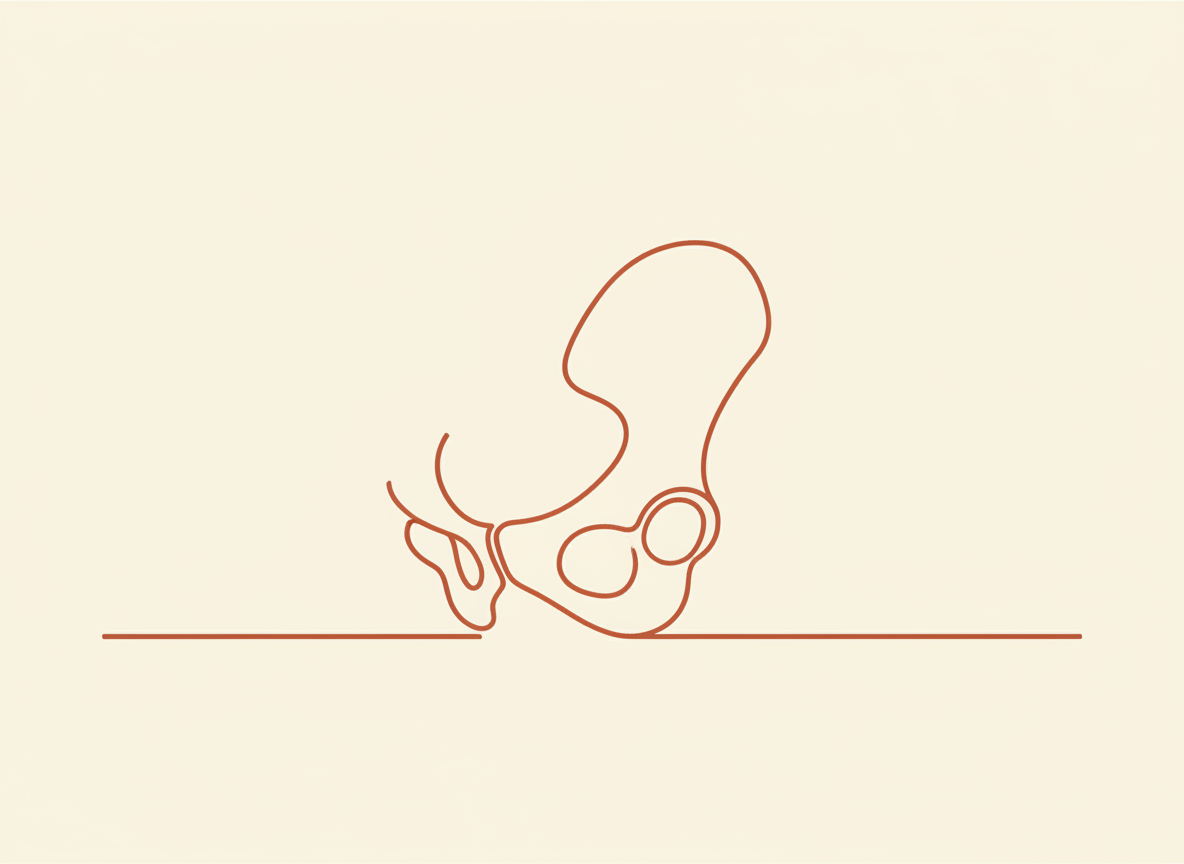
Your pelvis sits flat.
A mattress is a flat plane. Lying on it, your pelvis is neutral — tipped neither forward nor back. Nobody chooses this position. It's simply what the surface gives you, and it's where almost every couple in the country starts.
STEP TWO
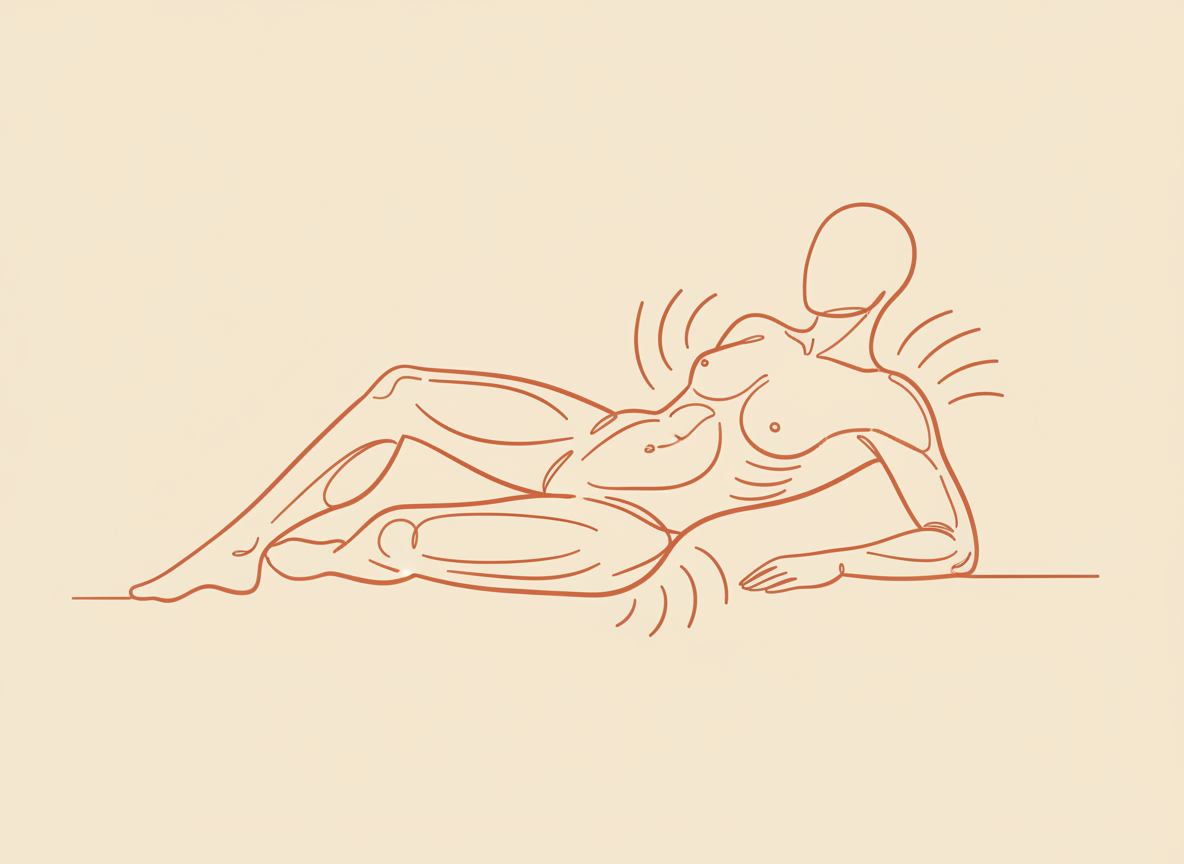
Your body becomes the support.
With nothing underneath, you hold the position yourself. Legs, lower back, pelvic floor. Ten minutes in, that's work. Twenty minutes in, it's discomfort. And it builds so gradually across years that you never identify a starting point.
STEP THREE
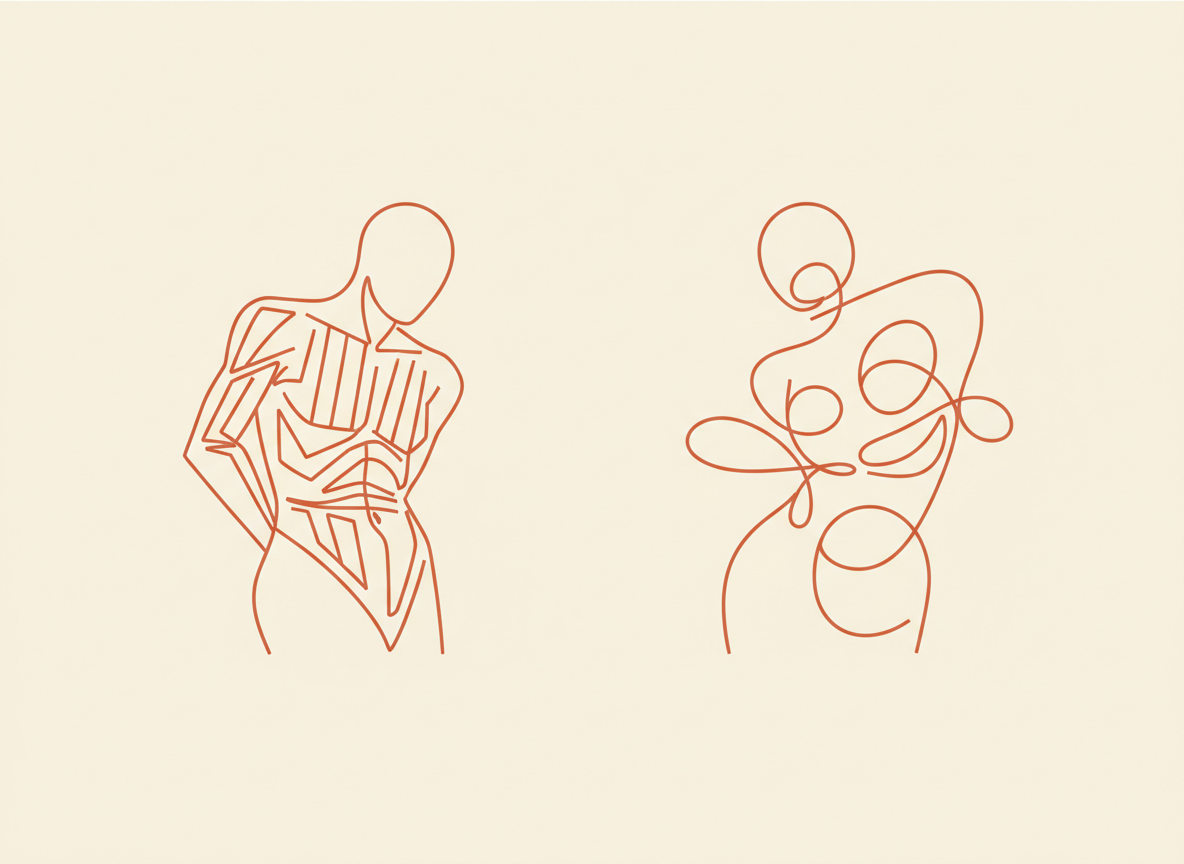
Bracing replaces relaxing.
This is the part nobody explains. Tension and arousal use the same muscles in opposite directions. A body that is working to hold a position cannot simultaneously let go of one. You are not distracted and you are not uninterested. You are occupied.
STEP FOUR
So you start declining.
And you blame yourself. Nobody makes a decision to stop. It just becomes easier to say no than to spend tomorrow morning aching. And because the mechanical cause was never explained to you, the only available explanation is that something has changed in you.

Change the angle at Step One and all four steps change with it.
The Night Nothing Was Supposed to Happen
It arrived four days later in a plain brown box with no branding on the outside. I want to be specific about that, because it was the thing I'd been most anxious about and it turned out to be a non-event. It could have been a lamp.
Inside it looked like what it is: a firm wedge in a soft cover. It sits on a bed like a bolster cushion. I put it on my side, near the headboard, and it stayed there for two days before either of us mentioned it. When Tom asked, I said it was for my back. Which was true.
50-60 kg/m³ high-density foam — holds shape under body weight
Silicone non-slip base — doesn't travel across sheets
Removable velvet cover, machine washable
Waterproof inner liner beneath the cover
I'm going to be honest about what happened next, because I think the exaggeration in how these things get sold is a large part of why women my age don't trust them. It was not dramatic. What happened was smaller and better than dramatic.
My hips tilted. My lower back stopped pulling. And about a minute in, I noticed something I had genuinely never noticed the absence of before: I wasn't doing anything to hold myself in place.
That was it. That was the whole difference. I was not working. Everything downstream of that changed on its own. I wasn't clenching, so I wasn't distracted by clenching. I wasn't counting down. When it was over my back didn't ache and I didn't lie there doing the mental arithmetic of whether it had been worth it.
Afterwards Tom said, "You seemed different tonight." I said I felt different. Neither of us understood yet that nothing about either of us had changed. Only the angle had.
Why the Angle Does the Work
It removes the holding job.
The wedge supports the position so your body doesn't have to. That is the entire mechanism. Everything else follows from it.
It's a density problem, not a design problem.
Standard bed pillows are 20-30 kg/m³. They compress under body weight in well under a minute and then slide. This is 50-60 kg/m³ — the same class of foam used in positioning supports.
It works in the positions you already use.
This isn't about adding anything to your repertoire. It's about the ones you gave up on becoming physically available again.
It does nothing you have to learn.
There is no technique. You put it under your hips. The angle is built into the shape.
What the Next Two Months Actually Looked Like
NIGHT ONE
I noticed I wasn't holding myself up.
Not fireworks. The absence of work. I kept waiting for my back to start complaining and it never did.
WEEK ONE
I stopped running the calculation.
There's a calculation you run before you say yes — how tired am I, how much will I regret this tomorrow. That week I noticed I had stopped running it.
WEEK THREE
I was the one who suggested it.
For the first time in longer than I want to put in writing.
MONTH TWO
It stopped being a topic.
That's the part I didn't expect. It went back to being ordinary. Not an event, not a project, not something we were working on. Just part of the week again.
Why This Is Getting Passed Between Friends
It spreads the way Rachel gave it to me — sideways, in a car, between two people who trust each other. Not because anyone is excited about a cushion. Because of what it takes off the table.
What she notices
No bracing, so no aching the next morning
Positions that had quietly become off-limits are available again
She stops running the cost-benefit calculation beforehand
The explanation stops being "something's wrong with me"
What he notices
She isn't holding back and he can feel the difference
No strain through his own lower back and shoulders
He stops wondering whether he's the reason
She starts initiating, which he had stopped expecting
Why the Cheap Ones Don't Work
Once you know what to search for, you'll find wedges for thirty dollars. I looked at them. Here is what I learned before I bought.
The foam is the wrong density.
Most inexpensive wedges use the same 20-30 kg/m³ foam as a bed pillow, just cut into a triangle. It holds shape for the first minute and then you're back on a flat surface with a lump under you. The shape is not the product. The density is.
The angle is too steep.
Cheap wedges are typically built at 40 to 60 degrees, because a steeper wedge is easier to manufacture and photographs more dramatically. At that angle your lower back leaves the mattress and you've traded one holding job for another.
There's no base.
Without a silicone grip layer, a wedge travels. You stop, you reposition, and the whole point — not having to think about it — is gone.
The cover is wrong against skin.
A lot of them arrive in a woven polyester that feels like outdoor furniture. It reads as equipment, which is precisely the feeling you're trying to avoid in your own bedroom.
Nothing underneath the cover.
No waterproof liner means the core absorbs everything and can't be cleaned. That's a six-month product.
The difference between a thirty-dollar wedge and this one isn't branding. It's foam density, angle, base, and a liner. Four things, all of them boring, all of them the entire product.
Why the Usual Advice Never Fixed It
Lubricant
Solves friction. Friction wasn't the issue. If your body is bracing, a slippery surface doesn't stop it bracing.
Hormone creams
Address tissue quality, and for a lot of women they genuinely help. They do not change the angle your pelvis sits at.
Wine, candles, date nights
Change the mood. The mechanics stay exactly where they were. You end up in the same position in a better outfit.
Stacked bed pillows
The right instinct, the wrong material. They compress in under a minute and then slide. You readjust, and the moment has gone.
"Just relax"
You cannot relax your way out of a structural problem. Telling someone to stop bracing without removing the reason she's bracing isn't advice. It's pressure.
Every one of those fixes something real. None of them fixes the angle.
What It Costs, and Why
ReAlign sells for $199 on its own. There's no Amazon listing and no retail. Partly that's margin, and I'd rather say that plainly than pretend it's a philosophy. But it's also because this is not a product anyone wants to pick up off a shelf, and the packaging matters more here than it does for almost anything else you'll buy this year.
Right now, ordering through this page includes three companion guides that aren't sold separately. I mention them last on purpose, because the wedge is the thing that works. The guides are the part that saves you the six weeks of figuring it out that I spent.
What's Included
ReAlign — the wedge itself
$199
The Positioning Guide
22 illustrated pages. Placement for eight positions, plus what to change if either of you has back, hip, or knee limitations.
$34
Mechanical or Hormonal? A Short Guide
12 pages on telling the difference between what positioning can address and what belongs in a conversation with your doctor. Written because nobody drew me this distinction and I wasted two years on the wrong one.
$29
How to Bring It Up
Four pages. The conversation, and the three framings that don't land as criticism. This is the one women write to us about.
$19
Total value
$281
Today, through this page
$129
One purchase. No subscription, no refills, nothing to replace.
See the setups →
Free discreet shipping · Plain box · No signature required
Ninety Nights. Then Decide.
Use it as often as you like for ninety nights. If nothing has changed, email us and we'll refund the full amount. Keep the wedge. We're not going to make you ship foam across the country to prove a point, and we're not going to ask you to explain yourself.
Women Who Were Told This Was Just How It Is Now
★★★★☆
4.7 average · [REVIEW COUNT] reviews
★★★★★
I kept waiting for my back to start complaining and it just didn't. That was the whole thing, honestly. Not fireworks. I got to the end of it without having spent the entire time managing my own body. The next morning I noticed I wasn't sore and I actually sat on the edge of the bed for a minute thinking about it.
K
Karen M., 56 · Married 29 years
✓ Verified buyer
41 people found this helpful
★★★★★
I want to say this for anyone reading who is where I was. I had decided there was something wrong with me. Not in a dramatic way — just a quiet, settled conclusion I'd stopped questioning. It was three years of that. It took one night to find out I had been wrong the entire time, and I'm still a bit angry that nobody ever explained the mechanical side of it to me.
D
Diane P., 54 · Married 26 years
✓ Verified buyer
88 people found this helpful
★★★★★
My worry was entirely about how he'd take it. I thought it would land as 'you're doing something wrong.' It didn't at all. He said he'd been wondering for years whether he was the reason and had never found a way to ask. We ended up having a better conversation about it in ten minutes than we'd managed in a decade.
S
Susan R., 58 · Married 31 years
✓ Verified buyer
127 people found this helpful
★★★★☆
I'll be straight — I thought this was an overpriced pillow and I nearly didn't order it. I've bought enough things that promised to fix something and did nothing. The difference here is that it's not really promising anything. It's a firm wedge that holds an angle. That's all it does and it turns out that was all that was needed.
B
Barbara L., 61 · Married 34 years
✓ Verified buyer
64 people found this helpful
★★★★★
We both have bad hips, and over the years we'd quietly narrowed things down to about two positions that didn't hurt one of us. I hadn't realised how small that had got until it wasn't the case anymore. The guide that came with it was more useful than I expected — it tells you what to change if someone has a bad knee or back rather than assuming everyone's forty.
C
Colleen B., 52 · Married 22 years
✓ Verified buyer
39 people found this helpful
★★★★★
The box gave nothing away, which mattered to me more than I'd like to admit. And it genuinely does look like a bolster cushion. My daughter stayed over in October, made the bed, moved it to the chair, and said nothing about it because there is nothing to say about it. That was the last of my hesitation gone.
J
Janet S., 49 · Married 18 years
✓ Verified buyer
52 people found this helpful
What Another Year of This Looks Like
Nothing dramatic. That's the honest answer and it's also the problem. There won't be a fight about it. There won't be a moment where either of you says out loud that this has become a thing. It will just carry on being the subject neither of you raises, and every month you don't raise it, raising it gets slightly harder.
That's what I'd want someone to have told me three years earlier. Not that my marriage was in danger — it wasn't. Just that I was spending years being quietly wrong about my own body, for a reason that took one object and one night to disprove.
I'm fifty-four. I have, if I'm lucky, another thirty years of this body. I'd spent three of them on a misdiagnosis. I'd like the rest of them back.
90-Night Guarantee
Secure Checkout
Plain Discreet Box
Ships from the USA
You are not broken and you have not lost interest.
You have been lying flat on a surface that asks your body to do a job nobody told you about.
That is a fixable problem. It's fixable tonight.
Choose your setup →
Ships in 3-5 days. Plain box, no branding, no signature.
Reading this and thinking of your wife? →
Here's the version to send her
This was my biggest hesitation and it turned out to be backwards. The framing that works is the true one: this is about the surface, not about either of you. Most partners are relieved. A lot of them have been quietly wondering whether they were the reason. The included guide covers the three framings that don't land as criticism.
Like a bolster cushion. It's a wedge in a velvet cover. It sits on the bed or leans against the headboard and it doesn't read as anything other than furniture. It arrives in a plain box with no branding on the outside and no product name on the label.
Positioning is mechanical, not hormonal, so the angle does the same thing at any age. What it won't do is address tissue changes — that's a conversation for your doctor, and there are treatments that work well. Those are two separate problems and it's worth knowing which one you're dealing with. The included guide walks through the difference.
Ninety nights. If nothing has changed, email us and we'll refund you in full. Keep the wedge.
No, and we won't describe it as one. It's a positioning cushion. It does not treat, cure, or diagnose anything. If you have persistent pain during intimacy, that's worth raising with a doctor or a pelvic floor physical therapist, because there are causes a cushion cannot address.
Three to five days from our US warehouse. Plain box, no signature required, nothing on the outside that identifies the contents.
This page is a paid advertisement for ReAlign.
The account above is a composite drawn from customer interviews; names and identifying details have been changed. Individual experiences vary.
ReAlign is a positioning cushion. It is not a medical device and is not intended to diagnose, treat, cure, or prevent any condition. Persistent pain during intimacy should be discussed with a qualified healthcare provider.
Research cited: Hensel DJ, von Hippel CD, Lapage CC, Perkins RH (2021). Women's techniques for making vaginal penetration more pleasurable: Results from a nationally representative study of adult women in the United States. PLOS ONE 16(4): e0249242.
© 2025 ReAlign. All rights reserved.